Affordable and roomy: FCC (Family Car China)
In 1994 the Chinese central government invited 20 major Western automakers to come up with a proposal for a small family car for the Chinese auto market. The car had to be cheap, clean, big enough to carry five people, and was to be manufactured in China under a joint venture with First Auto Works. Several automakers responded with plans and prototypes, including Chrysler, Fiat, Ford, Mercedes-Benz, Mitsubishi, Opel, and Porsche.
At this “Family Car” exhibition in Beijing, Mercedes-Benz presented a compact car concept specially developed for the future Chinese market, named “Family Car China” (FCC). The FCC, which was capable of being built in a variety of different versions, was part of an integrated motorization strategy for China which Mercedes-Benz presented to the Chinese government.
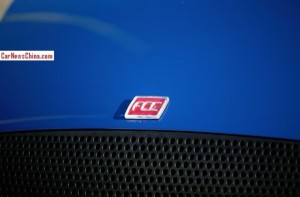
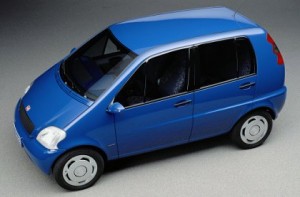
Chief designer was Harald Leschke, an expert concept car designer. Leschke also designed the C 112, Vision A, Maybach Exelero, F 100, F200 Coupe, F300 Life Jet, and the F400 Carving. The FCC was an extra special project. It was destined for a single market with a giant potential. The FCC was revolutionary for its time, with a one-box design and short front and rear overhang and many other features taken from 1993 Vision A.
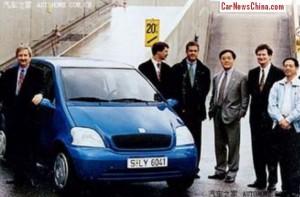
The main features of the FCC concept were its large interior space within compact exterior dimensions, coupled with highest standards of comfort, quality and environmental acceptability.
The “Family Car China” was radically different from conventional passenger car designs in this class. The body, with its pioneering one-box styling, presented an integral appearance similar to that of a modern people carrier. This had practical benefits: the driver, front passenger and up to three rear-seat passengers enjoyed standards of spaciousness which went well beyond what was previously the norm in compact cars, putting the FCC on a par with an upper mid-range sedan. Nevertheless the FCC was shorter than normal compact cars in its class, with an overall length of 3.56 meters and correspondingly modest road space requirements.
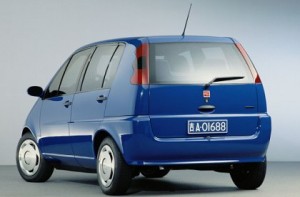
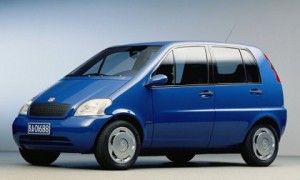
The Mercedes-Benz FCC met high standards in the field of safety, too. This was achieved mainly by the underfloor location of the compact engine/transmission module, which slid under the floor in the event of a frontal impact. Further occupant protection was provided by airbags, front belt tensioners and head restraints on all seats. ABC and airbags were a rarity for a compact car in th 1990’s. The occupants were also well protected in a side impact, due to the higher seating position.
The Mercedes-Benz FCC concept was equipped with a 1.3 liter 40 kW (55 hp) gasoline engine with three-way catalytic converter. This gave the FCC a 0 – 50 km/h time of less than six seconds, offering good performance around town, a theoretical top speed of close to 150 km/h and fuel consumption of approximately four liters per 100 km.
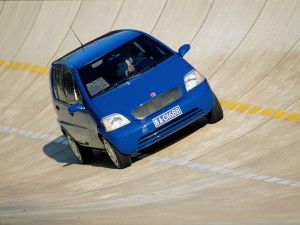
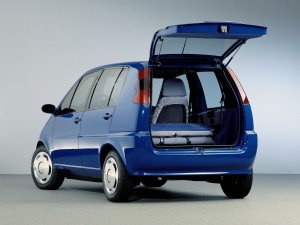
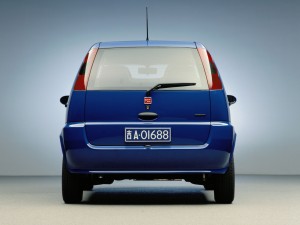
The FCC was capable of being produced in a variety of different versions, from the five-door five-seater base version and a people carrier version with three rows of seats and capacity for seven passengers to a five-seater pickup with a small cargo area for bulky loads or a two-seater panel van with plenty of carrying capacity. Mercedes-Benz, However, only made a single prototype of the basic five-seater. Inside the vehicle a typical Chinese family; happy parents, the one child, and a granny.
Something Mercedes-Benz excels at, as it has demonstrated on many occasions, is developing vehicles as part of a larger mobility strategy. The Family Car China is one such example, one which also shows that compact exterior dimensions can be perfectly compatible with large interior space and highest standards of comfort, quality and environment-friendliness.
Apr 10 2014
1994 Mercedes-Benz FCC (Family Car China)
Affordable and roomy: FCC (Family Car China)
In 1994 the Chinese central government invited 20 major Western automakers to come up with a proposal for a small family car for the Chinese auto market. The car had to be cheap, clean, big enough to carry five people, and was to be manufactured in China under a joint venture with First Auto Works. Several automakers responded with plans and prototypes, including Chrysler, Fiat, Ford, Mercedes-Benz, Mitsubishi, Opel, and Porsche.
At this “Family Car” exhibition in Beijing, Mercedes-Benz presented a compact car concept specially developed for the future Chinese market, named “Family Car China” (FCC). The FCC, which was capable of being built in a variety of different versions, was part of an integrated motorization strategy for China which Mercedes-Benz presented to the Chinese government.
Chief designer was Harald Leschke, an expert concept car designer. Leschke also designed the C 112, Vision A, Maybach Exelero, F 100, F200 Coupe, F300 Life Jet, and the F400 Carving. The FCC was an extra special project. It was destined for a single market with a giant potential. The FCC was revolutionary for its time, with a one-box design and short front and rear overhang and many other features taken from 1993 Vision A.
The main features of the FCC concept were its large interior space within compact exterior dimensions, coupled with highest standards of comfort, quality and environmental acceptability.
The “Family Car China” was radically different from conventional passenger car designs in this class. The body, with its pioneering one-box styling, presented an integral appearance similar to that of a modern people carrier. This had practical benefits: the driver, front passenger and up to three rear-seat passengers enjoyed standards of spaciousness which went well beyond what was previously the norm in compact cars, putting the FCC on a par with an upper mid-range sedan. Nevertheless the FCC was shorter than normal compact cars in its class, with an overall length of 3.56 meters and correspondingly modest road space requirements.
The Mercedes-Benz FCC met high standards in the field of safety, too. This was achieved mainly by the underfloor location of the compact engine/transmission module, which slid under the floor in the event of a frontal impact. Further occupant protection was provided by airbags, front belt tensioners and head restraints on all seats. ABC and airbags were a rarity for a compact car in th 1990’s. The occupants were also well protected in a side impact, due to the higher seating position.
The Mercedes-Benz FCC concept was equipped with a 1.3 liter 40 kW (55 hp) gasoline engine with three-way catalytic converter. This gave the FCC a 0 – 50 km/h time of less than six seconds, offering good performance around town, a theoretical top speed of close to 150 km/h and fuel consumption of approximately four liters per 100 km.
The FCC was capable of being produced in a variety of different versions, from the five-door five-seater base version and a people carrier version with three rows of seats and capacity for seven passengers to a five-seater pickup with a small cargo area for bulky loads or a two-seater panel van with plenty of carrying capacity. Mercedes-Benz, However, only made a single prototype of the basic five-seater. Inside the vehicle a typical Chinese family; happy parents, the one child, and a granny.
Something Mercedes-Benz excels at, as it has demonstrated on many occasions, is developing vehicles as part of a larger mobility strategy. The Family Car China is one such example, one which also shows that compact exterior dimensions can be perfectly compatible with large interior space and highest standards of comfort, quality and environment-friendliness.
By Catalin Varvara • Concept Cars 0 • Tags: 1994 fcc, 1994 Mercedes-Benz fcc, a class history, Family car china mercedes, mercedes a class